How to repair your hiking backpack
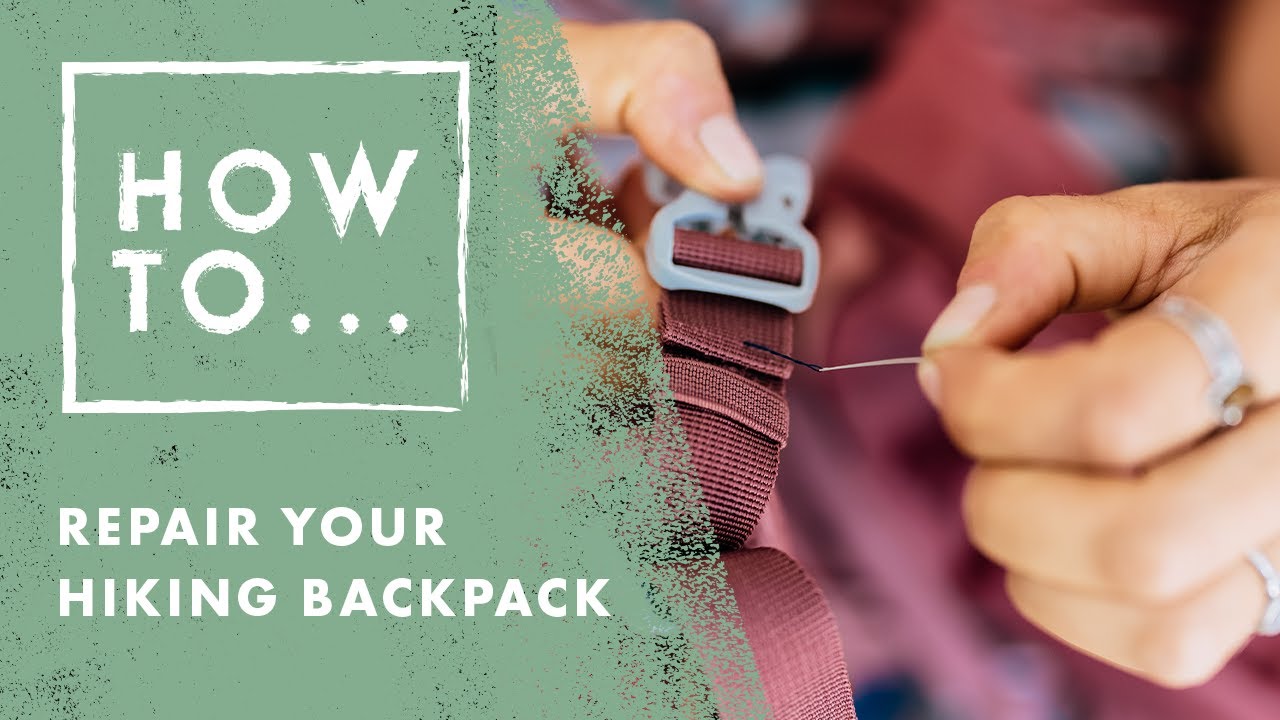
Your backpack has always been a faithful travel companion, always ready for adventure. It’s accompanied you on many adventures and holds your most beautiful memories so something like a small rip in the fabric doesn’t mean you need to get rid of it. Minor damage can be repaired! So before throwing it away you should know that it’s possible to give it new life. Here are our tips for hanging on to your backpack for as long as you can.
Take good care of your backpack
As a backpacker, your pack is a bit like your home on the road: it holds everything you need for a life of adventure and weathers the storms of your various missions. New materials, buckles and closures have all become more durable and are designed to last longer than ever. But even so, in order to maximize the life of your hiking backpack it’s important to do some minimal maintenance. For instance, when you’re heading out, be careful not to overload your pack because overloading can lead to deterioration. The load in your backpack must not exceed 20% of the hiker’s weight.
And when you return from your hike, we recommend making these things a habit:
- Empty and shake out your bag to get rid of any dirt
- Clean dust and dirt from the zippers
- Clean dirt and sweat stains on your bag and straps with water
- Let your pack air out before putting it away
- Close all the zippers and clips on your pack before storing it
- Store your backpack in a dry place that’s not exposed to direct sunlight
Find the full details for cleaning your backpack. And keep in mind that these good habits also apply to taking care of your running shoes and cleaning your hiking shoes.
Assess the condition of your backpack
To identify if your backpack needs repair, check for tears in the fabric, frayed or broken straps, broken zippers, or loose stitching. Also, look for malfunctioning buckles or closures and worn-out padding. Addressing these issues early can extend the life of your backpack and ensure it remains functional and comfortable.
Identify and reinforce potential defect areas by inspecting high-stress points like seams, zippers, and strap attachments. Look for wear, fraying, or weakness. Reinforce these areas with extra stitching, fabric patches, or stronger hardware. Regular maintenance and prompt repair of minor issues can prevent future catastrophes.
Repair and reuse!
It’s a bit similar to a tent; the most typical kinds of damage to a hiking backpack are usually either a tear in the fabric, a broken buckle or a closure that fails. All of these things can be fixed!
In case of a small tear, you can simply cover the hole with an iron-on patch. They’re easy to use and you can usually find them sold in the form of a repair kit. You should be able to find all kinds including different patterns, colors, thicknesses and even different materials. If you normally use your backpack in extreme conditions, we recommend using a waterproof patch. If the tear is more substantial – especially if it’s at the bottom of the pack – an iron-on patch might not be strong enough, in which case we recommend taking it to a shoe repair shop that will be able to reinforce the damaged area.
If you break or lose a buckle, start by calling customer service. They will have a replacement part for some models and can send it to you. Some parts are also standardized and can be purchased individually. As a last resort you can see if you can scavenge the same piece from one of your other backpacks or bags.
Although zippers are becoming more and more durable, they can fail and no longer zip. Changing a zipper requires sewing skills, and a sewing machine is also highly recommended. If you don’t have the skills, we recommend taking your pack to a seamstress or shoe repair shop where the zipper can be quickly replaced.
Finding professional backpack repair services
To find a reliable backpack repair service, check for providers with good reviews and certifications. Look for specialists in outdoor gear repair or those recommended by major backpack brands. Verify their use of proper equipment and materials. Local outdoor retailers or online platforms like Yelp or Google Reviews can help identify trustworthy services.
To determine if your backpack is beyond repair, assess the condition of key components like zippers, straps, seams, and fabric. If multiple parts are extensively damaged, repairs are more costly than a new backpack, or the structural integrity is compromised, replacement is likely needed. If you’re unsure then onsult a professional.
Give it a second life
If your hiking backpack is so heavily damaged that you can no longer use it for any of your activities it can often be recycled, make someone else happy, or even be upcycled…
1st case – in the same way that you can recycle your footwear, you can also recycle your backpack by taking it to collection points that are intended for this purpose. 2nd case – you can give it away or try selling it secondhand to someone who can restore it to working order. 3rd case – the principle of upcycling is to reinvent the product by finding a use for it that’s different from what it was originally designed for.
Several programs and collection points exist for recycling backpacks. Some outdoor gear brands offer recycling programs, where you can drop off used backpacks at their stores. Retailers like USA’s REI also has recycling initiatives for worn-out gear. TerraCycle, also US-based, runs specific recycling programs for hard-to-recycle items (including backpacks) through their Zero Waste Boxes. Additionally, local recycling centers or second-hand stores like Goodwill and Salvation Army might accept backpacks for repurposing or recycling. Always check with the specific program or store for their guidelines on accepting used backpacks.
Caring for and repairing your gear means not throwing it away, saving your money, and doing something good for our planet. By trying to repair or recycle your backpack, you’re giving it a second chance to hitch a ride on your new adventures!
Oprindeligt udgivet 15 juni 2021
Relaterede artikler
Se alle historier


